Emergency cover doesn't solve a school's staffing problem. It buys the one thing every good decision actually requires: time to make it without panic.
It's a small distinction with large consequences, and it's the one most schools get wrong the first time they encounter a real staffing gap. They bring in cover, the day is saved, and somewhere in the relief of having survived it, the cover quietly gets mistaken for a solution rather than what it actually was — a pause button, pressed just long enough for someone to think clearly.
The System View
There is a useful distinction, borrowed from engineering, between a repair and a stopgap. A repair fixes the underlying fault — the corroded pipe is replaced, the failing part is swapped out, the root cause is addressed so the problem does not recur. A stopgap simply keeps the system running long enough for a proper repair to happen without being rushed. It doesn't fix anything. It suspends the consequences of the fault for a defined window of time, and its entire value lies in what happens inside that window.
Emergency classroom cover is unambiguously the latter, and schools that misunderstand this — expecting it to solve staffing rather than stabilise it — tend to be disappointed by something that was never designed to be a permanent answer. This confusion is understandable, because a well-executed stopgap can look, from the outside, indistinguishable from an actual fix. The room is staffed. The lesson happens. Nothing appears broken. But the underlying condition — a school without enough staffing depth to absorb a single absence — is exactly as fragile the day after the cover as it was the day before, and will resurface the next time a teacher is unavailable, whether that's next week or next term.
Its value lies entirely in what it prevents: the compounding failure that happens when an unstaffed classroom forces a hurried decision, and that hurried decision creates a second problem on top of the first. This compounding pattern is worth naming explicitly, because it is the actual mechanism by which a single absence turns into a genuine crisis. An empty classroom, left unaddressed for even twenty minutes, forces someone — usually whoever happens to be free — into an improvised decision: pull a manager off admin work, combine two classes that don't belong together, or cancel the lesson outright. Each of those improvised decisions creates its own downstream cost: an administrative backlog, a poorly matched combined class, a parent phone call that didn't need to happen. A stopgap that simply holds the line is, in a fragile system, doing exactly the job it should — not fixing anything, but preventing the first problem from manufacturing a second and third one behind it.
The View From the Front Desk
For the person actually standing at reception when a teacher fails to show, the abstraction of "bridge support" collapses into something much more immediate: a decision that has to be made in minutes, not hours, with parents already arriving and a room already empty. There is no time, in that moment, to design a solution. There is only time to execute one that was already decided in advance — or, in the far more common case, to invent one on the spot, badly, while trying to look composed in front of an audience that is watching closely for any sign that something has gone wrong.
This is where the emotional and the operational meet, and it is worth pausing on the emotional register specifically, because it is easy to treat this entirely as a logistics problem and miss the human cost sitting underneath it. Staff who have a cover option available describe the morning as stressful but manageable — a known problem with a known next step, executed calmly because the calm was built in advance rather than summoned in the moment. Staff without one describe it as something closer to dread. Not because the absence itself is unusual — teachers get sick, trains get delayed, this is not a rare event in the life of any small school — but because they know, from experience, what the next two hours of improvisation will cost them personally: the phone calls, the parent who wants an explanation right now, the sense of having to perform confidence they don't actually feel.
That distinction between stress and dread is not a minor emotional nuance. It is, in practice, one of the more reliable predictors of staff turnover at the front-desk level of an eikaiwa, a role already prone to burnout from the sheer volume of small, unglamorous problem-solving it requires on an ordinary day. A staff member who dreads a recurring, foreseeable event — because the school has never given them a tool to handle it — is a staff member quietly accumulating reasons to leave, even if the reasons never make it into an exit interview in those exact words.
The Operational Discipline
Structurally, emergency cover functions best when a school treats it as a defined capability rather than an ad hoc favour called in during a crisis — a shift in framing that changes almost everything about how the tool actually gets used.
Know the threshold in advance. Not every gap needs emergency cover — a five-minute delay is not a crisis, and treating it as one wastes a resource that should be reserved for genuine disruptions. Defining, ahead of time, what triggers activation removes the guesswork that wastes the first, most valuable minutes of a disruption. This sounds like a small administrative detail, but it solves a specific and common failure mode: the ten or fifteen minutes lost while staff debate, in the moment, whether a situation is serious enough to warrant calling in cover. A defined threshold — a teacher unreachable past a certain time, a delay past a certain length — converts that debate into a simple check, and simple checks are exactly what a stressed staff member can execute quickly and correctly.
Decouple the emergency response from the long-term staffing decision. Cover exists to keep the room running, not to determine who teaches the class permanently. Conflating the two under pressure is how schools end up making rushed hires they later regret — bringing in a substitute for one difficult morning and then, because the substitute happened to be available and competent, quietly sliding them into a permanent role without the deliberate evaluation that decision actually deserves. This is precisely the trap discussed elsewhere in this series: hiring decisions made under staffing-emergency conditions are hiring decisions made under the worst possible conditions for evaluating long-term fit. A good cover system exists in part to prevent this collapse, by giving a school enough breathing room that the emergency and the permanent hire never have to be solved by the same person on the same day.
Debrief afterwards, even when it worked. A successfully covered emergency is still information — about which classes were hardest to staff, which materials weren't substitute-ready, and where the process could be faster next time. This step is the one schools skip most often, precisely because success removes the urgency to examine what happened. But a cover event that goes smoothly is a rare, low-cost opportunity to stress-test the system without the system actually failing — the operational equivalent of a fire drill that happened to coincide with a real, small fire. Treating it as pure relief, rather than as data, wastes a chance to find the weak points before they matter more.
The Business Case
From a purely operational-risk standpoint, the cost of maintaining an emergency cover option is small and largely fixed, while the cost of not having one is variable, unpredictable, and can spike sharply on exactly the day it's needed most — a cancelled class, a frustrated family, a rushed and possibly poor staffing decision made under duress. This is, in essence, the textbook profile of an insurance product: a modest, predictable premium paid to cap an unpredictable and potentially much larger loss. Framed this way, the decision stops being a question of "do we need this" and becomes a question of "what is the actual size of the loss we're capping" — a question most schools have never rigorously worked through, because the cost of a bad staffing morning tends to be diffuse and hard to tally, spread across a cancelled lesson fee, a frustrated parent, a rattled staff member, and a hiring decision made in haste weeks later.
Schools that have priced this asymmetry correctly tend to treat cover arrangements less as an expense and more as a form of operational insurance: a small, known cost that caps a much larger, unknown one. This reframing matters practically, not just conceptually, because expenses and insurance premiums tend to get evaluated very differently inside a small business. An expense invites scrutiny and cost-cutting the moment budgets tighten. A recognised insurance cost tends to survive those same budget conversations, because everyone involved understands, at least intuitively, what it's protecting against.
It is this logic that has drawn a growing number of schools towards standing relationships with external teacher-cover providers, used not constantly, but as a capability that exists precisely because no one can predict which morning will require it. The value of the relationship is not measured in how often it's activated. It is measured, somewhat counterintuitively, by how rarely a school needs to think about it at all — which is exactly the mark of a well-functioning stopgap sitting quietly in reserve.
The Human Stakes
For the family arriving at the door, none of this operational reasoning is visible, nor should it be. What they see is simply whether the lesson happens. They do not see the phone call made twenty minutes earlier, the cover arrangement activated on schedule, the calm hand-off between an absent teacher's materials and a substitute stepping in cold. All of that machinery is, by design, meant to stay invisible — which loops directly back to the argument at the centre of this entire series: the best operations are the ones nobody notices, precisely because noticing them would mean something had already gone wrong.
A school that has quietly arranged for that lesson to happen anyway, despite something having gone wrong behind the scenes, is demonstrating — without saying a word about it — exactly the kind of reliability that earns a parent's long-term trust. It is a strange kind of credit: the parent never learns what almost happened, and so never consciously credits the school for preventing it. But that invisible reliability accumulates anyway, quietly, across a year of small crises that never became visible ones, and it is very often the difference between a family that re-enrols without a second thought and a family that starts, almost imperceptibly, to wonder whether this is the right school after all.
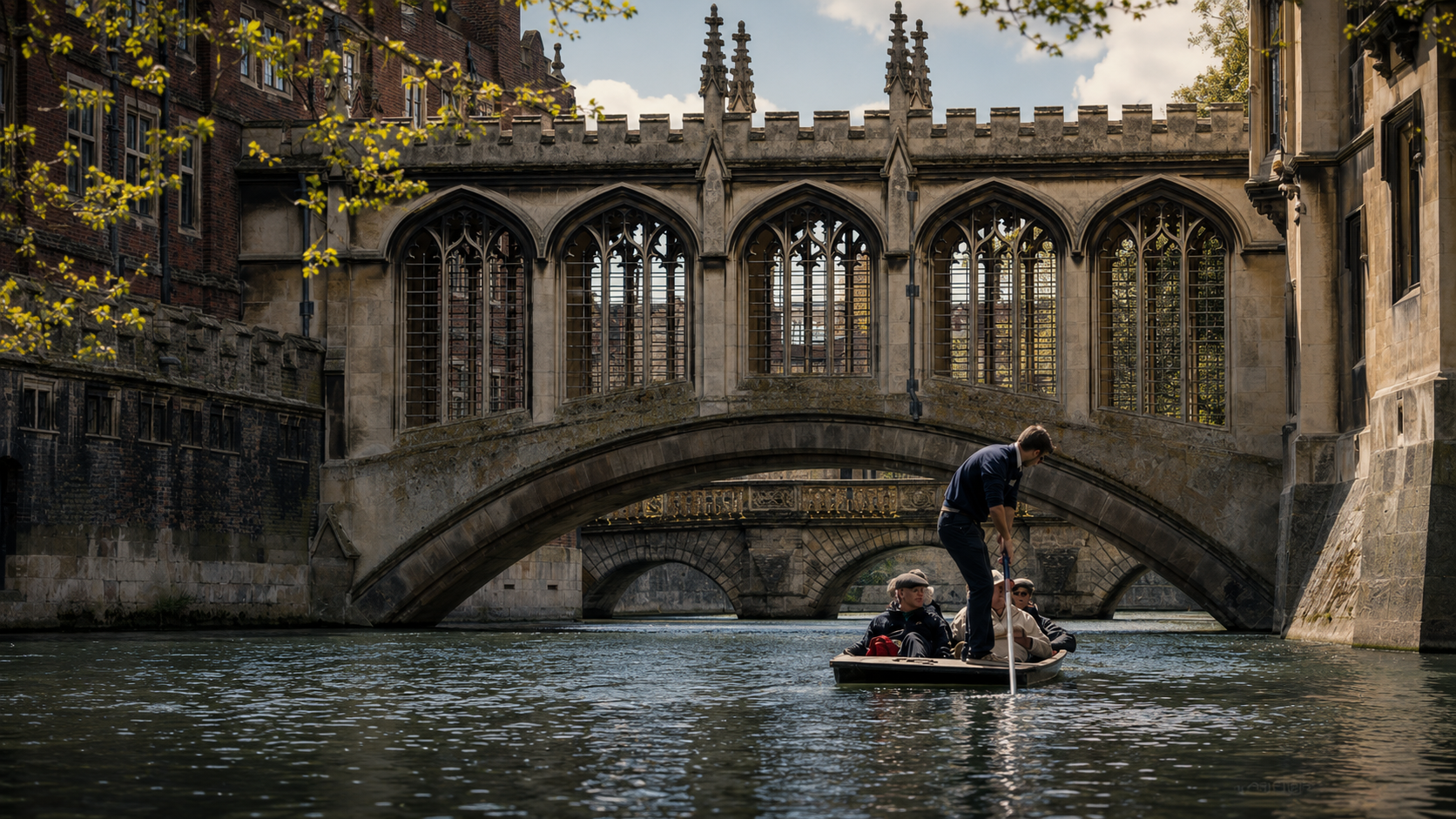
The bridge doesn't need to be permanent to matter. It only needs to hold long enough for the school to decide, calmly, what comes next — and in an industry built on very little margin for error, that small, unglamorous window of calm is very often the only thing standing between an ordinary bad morning and a genuinely damaging one.
Reporting drawn from patterns observed across English-language schools in Japan navigating staffing continuity.